By: Stephanie Cognigni, Experiential Programming and Outreach Coordinator
How to get started
- Community projects that create real impact
- Mentorship programs with peers or professionals
- Fellowships that grow your leadership skills
- Workplace simulations that let you test-drive career scenarios
- Clubs and student groups where you can lead, plan and collaborate
These activities help you develop the skills employers value most — like communication, teamwork and problem-solving — while letting you apply your knowledge in real-world situations.
Think of it as a chance to boost your resume, meet great people and discover what you’re capable of. Whether you want to prepare for your career, explore something new or just get involved, we’ll help you find the right opportunity.
We can help you experience, reflect and act (ERA)
We have the resources and supports to help you not only gain experience but also reflect on what you’ve learned and create an action plan. This will help you leverage each experience to enhance your academic and career journey.
This experiential learning model ensures that you gain the skills and critical thinking needed to maximize your learning experience.
Use these resources to help you get started and guide your experiential learning journey.
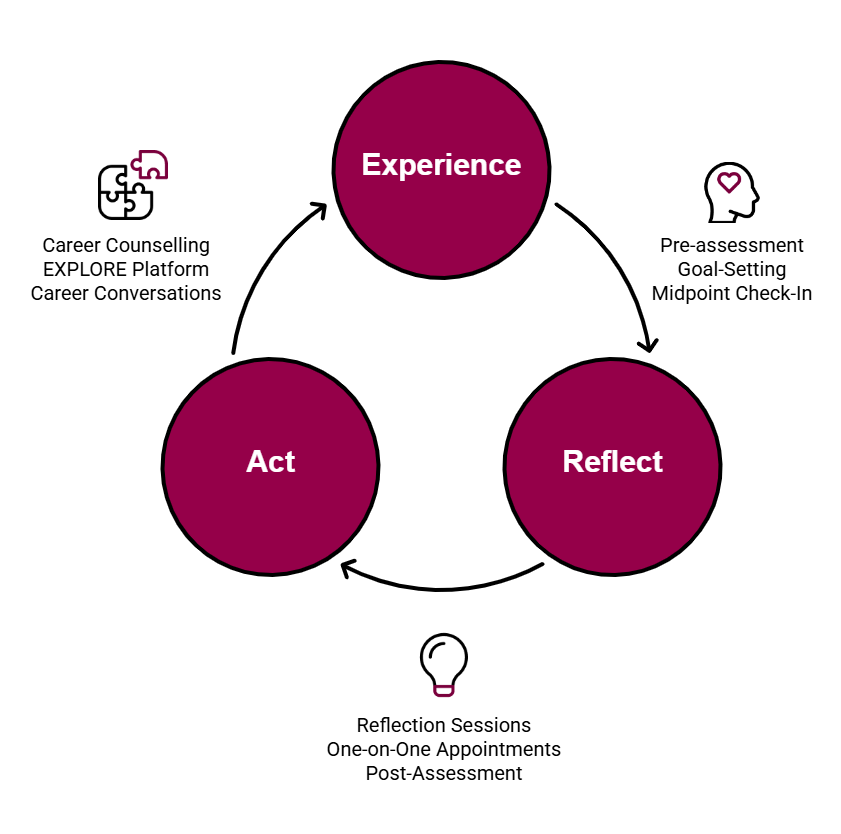
- Experience: pre-assessment, goal-setting, midpoint check-in
- Reflect: reflection sessions, one-on-one appointments, post-assessment
- Act: career counselling, EXPLORE platform, career conversations
Use SMART goals to prepare to make the most of any experiential learning opportunity When setting goals, using the SMART... Ask yourself these questions to guide your reflection and make the most of your experience 1. Skills and knowledge gained:... What to consider when creating a post-placement action plan Your action plan checklist Career counselling appointment: Book a one-on-one career...Experience | Setting goals for experiential learning
Reflect | Understanding your experiences
Act | Making an experiential learning action plan